Project Afternight Hardest Songs
Extreme, Technical, Endurance, Specialist — how to judge a chart before you waste an evening on it.
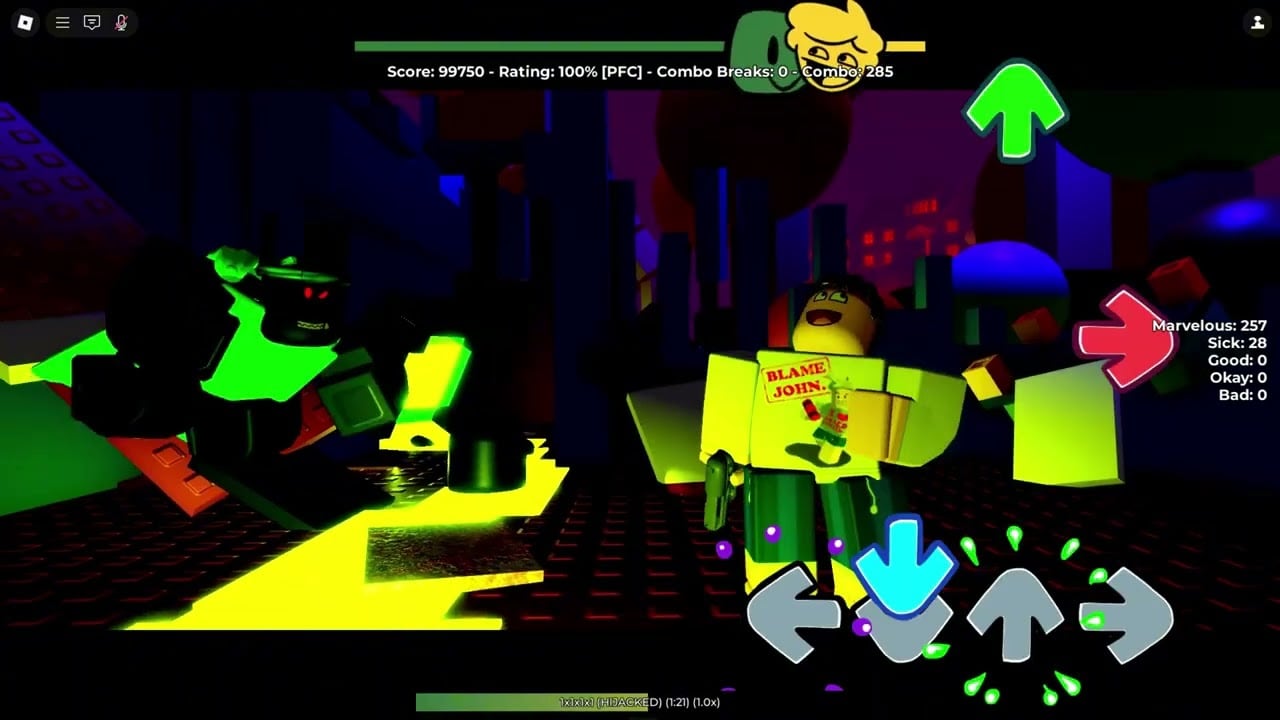
Project: Afternight has nearly 4,000 charts. Not all of them are built equal. This page is how you separate a hard chart from a waste of your evening. It is not a universal ranking — rankings are entertainment, not facts. It is a framework for evaluating any file before you promise a Full Combo on it at 2 a.m.
The video embedded above shows broad chart variety across the PAFN catalog. Use it as a discovery tool, not a tier list.
How difficulty actually works in PAFN
Speed is not the only factor. A 200 BPM chart with even streams can be easier to read than a 160 BPM chart with constant direction changes, awkward brackets, and 12-note bursts that come out of nowhere. Before you label a file as hard, ask:
- Note density — how many notes hit per second in the hardest section?
- Pattern complexity — does the chart use jacks, rolls, brackets, or constant direction switches?
- Stamina demand — how long is the hardest section, and does it repeat?
- Accuracy window — how small is the timing window for perfect hits?
- Visual pressure — does the chart use dense lanes, flashing backgrounds, or event animations that hide notes?
When several of these land together, you have a genuinely hard chart. One fast section does not make a chart hard if everything else is readable.
The four difficulty tiers
Extreme
Charts that combine high speed, dense patterns, and mixed demands. You need reading speed, stamina, and clean accuracy simultaneously. These are the charts people clip to show they exist — not the charts you start on.
Expect: sustained note streams, rapid direction changes, long demanding sections, and zero recovery time.
Best approach: play the chart once on Easy to read the patterns, then practice the hardest section in isolation before attempting a full run.
Technical
Charts built around awkward or unusual patterns rather than raw speed. The BPM may look manageable, but the chart uses jacks, irregular spacing, or tricky transitions that punish players who rely on muscle memory over reading.
Expect: sudden direction changes, unusual note groupings, patterns that feel off-rhythm.
Best approach: slow the chart down in practice if the option exists, or use a slower note speed until the pattern becomes readable.
Endurance
Long charts where the challenge is surviving to the end rather than any single hard section. The early parts may be comfortable, but the final third introduces repeated fast sections, hold-heavy passages, or stamina walls.
Expect: increasing difficulty across the song, long demanding sections, fatigue as a real factor.
Best approach: warm up properly, play the full chart at least twice to see where stamina breaks, and do not judge this chart from one attempt.
Specialist
Charts that are difficult because of one specific gimmick. Maybe the file uses a 9-key layout that your bind setup cannot handle cleanly. Maybe it requires a scroll speed that hides note transitions. Maybe it is built around a pattern type you personally struggle with.
Expect: one identifiable reason the chart is hard, which may not apply to every player.
Best approach: identify the gimmick, decide if it is something you can practice into, and do not assume a Specialist chart is universally hard.
The most reliable difficulty test
Play the chart. Do not watch a video of someone else playing it. Do not read a comment section ranking. Play it once, clean. Then look at:
- Where the misses clustered — early means reading, late means stamina, scattered means the chart is genuinely inconsistent.
- Whether the hard parts felt like they were in your control or luck.
- Whether a second clean attempt showed improvement.
If you can repeat the result on a second run, you have a real benchmark. If it took perfect luck to survive, the chart is probably harder than its reputation.
For custom icon hunters
The custom icon unlock requires 50 unique qualifying Full Combos. A qualifying FC means the song has at least 175 notes and you completed it without breaking combo. This is why playing S-tier Tutorial 100 times does not count — it is too short.
When you are building that 50-FC list, prioritize charts that are:
- Long enough to qualify (175+ notes).
- Reproducible — you can FC the same file on multiple attempts.
- Difficult enough that the FC feels earned, but not so hard you are gambling every run.
B-tier and A-tier files are the practical sweet spot for FC grinding. D-tier mania charts can count, but they are less consistent for most players.
What does not make a chart hard
- A YouTuber saying it is hard. Clips are edited. They show the best moment, not the 47 attempts before it.
- High BPM alone. Density and pattern quality matter more than the number on the BPM counter.
- Insane label. Some Insane charts are dense B-tier. Some Normal charts use gimmicks that create more real difficulty.
- A jumpscare animation. Horror art does not make a chart technically harder. It makes it uncomfortable to play at 2 a.m.
Practical first step
Pick one chart from each tier above. Play each one on Easy or Normal twice. Write down where your misses came from. After three sessions, you will have a better personal difficulty map than any community tier list — and you will know which charts to actually queue for FC grinding.
Do not start with the hardest chart in your library because someone on Discord called it a “one-of-one.” That is how people FC Tutorial and nothing else.
Frequently Asked Questions
Quick answers to the most common questions.
What is the hardest song in Project Afternight?
There is no verified universal ranking. The hardest practical charts combine extreme density, technical patterns, and stamina demands. Try the chart on Easy first before committing a grinding session to it.
Do Full Combos count toward custom icons?
Yes — 50 unique qualifying FCs unlock custom icon uploads. Qualifying means the song has at least 175 notes and you broke no combo.
Are mania charts always the hardest?
Not always. Some 4-key charts with complex technical patterns are harder to FC than a straightforward 9-key file. Key count is a layout, not a difficulty rating.
Should I trust community tier lists?
Use them for discovery, not as facts. Play the chart yourself and rank it by your own results, not a YouTuber's entertainment ranking.
Where do I practice hard sections?
Use the practice mode or lower difficulty to isolate the section that kills you. Repeat it five to ten times before attempting the full chart again.